Drendast, Part 2: The Unknown

Image

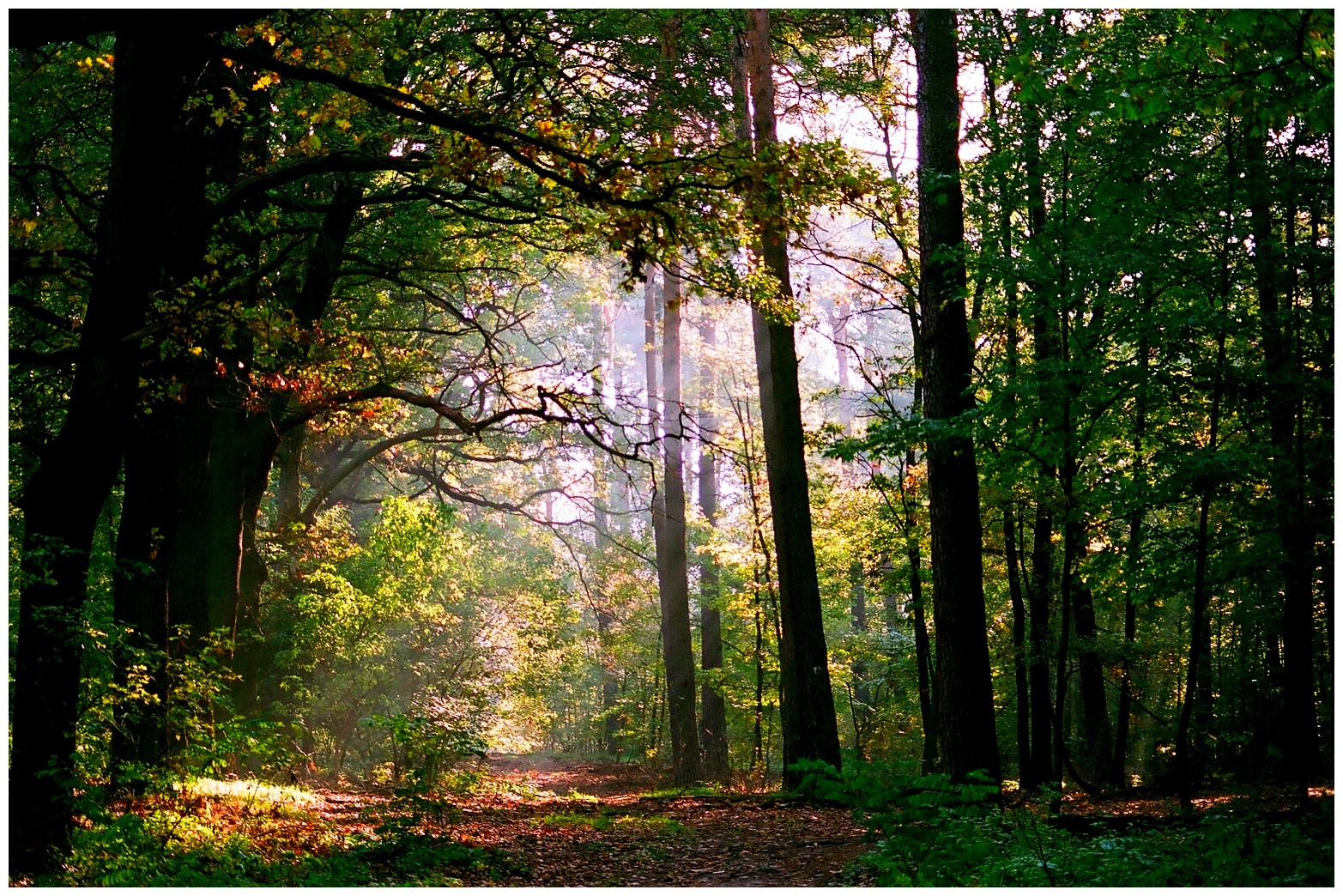
What Earthporn ain’t good for, I’ll never know. Thanks to redditor Snahans for sharing this image here.

I can imagine a lot of similarities between Earth and Drendast. Forests, deserts, mountains, oceans, islands, and various other non-polar terrains. But when it comes to imagining (to say nothing of describing) what sets Drendast apart from Earth, I come up with as many misses as I do hits.

As mentioned in Drendast, Part 1: The Big PictureDrendast is a mega planet, nearly 100 times the diameter of the sun. It is so massive that it has three (3) suns orbiting around it, not the other way around. Prior to the fall of one of those suns, called Tropreus, into the planet, there was perpetual daylight. Life evolved in a manner which capitalized on that bountiful, endless supply of energy, easily able to meet all basic needs in peace. This meant no predation, no struggle to survive. Life was a free gift.

Additionally, the surface of the planet is more than 90% ocean, save for what looks like 12 little islands spread out evenly around its surface. Those islands, called Subworlds, are actually massive, Pangaea-sized super continents, connected to one another via a naturally occurring intra-planetary network of Conduits.

I could go on about other known features about Drendast, similar or different from what we might expect to find on Earth, but the point of this entry is to emphasize the fact that there’s still tonnes of details which are unknown or not clearly understood about the planetary super system. For example:

How is it that the gravity isn’t too crushing for complexity and, eventually, self-replicating proto-life forms to emerge? Does the presence of ether mitigate some of gravity’s more intense effects at that magnitude?

How are days marked with three suns in the sky, if at all?

Wouldn’t there be solar tides? How would they effect the planet’s surface?

In what ways is the climate on Drendast unlike that found on Earth?

Does Drendast have a determinable spin/rotation?

Does the Drendain stellar system orbit around anything else out in deeper space? Like how our solar system orbits around the super massive black hole in our galaxy’s center?

Are there other, more distant stars and celestial bodies? If so, are Drendains aware of this fact prior to the fall of Tropreus, given that it should be impossible to see stars in the night sky if there’s never any night?

Is there tectonic activity on Drendast prior to the Fall? If so, how does it manifest itself? Would it at least partly be caused by the orbits of the suns?

What is the present day role of the formative primordial ether at the planet and suns’ cores, if any? I mean, right now, it’s the ambiguous, cosmic, vaguely-spiritual, ultra caveat any sci-fi writer might like to have on hand to magically conjure up an otherwise impossible explanation for how and why things are the way they are, and I’m happy to use it to explain the cosmic origins of Drendast, but beyond that..?

If Drendast has no spin of it’s own, does it have a magnetic field? If so, how? Is it anything at all like that found on Earth? If not, again, how so? — I’m thinking the suns each contribute equally to what might be described as a dynamic, ‘Triune’ (or ‘three-in-one’) magnetic field around and resonating with Drendast.

Are there monsters on Drendast, despite ideal evolutionary conditions?

Drendast and the three suns may be deified by the Drendain peoples, but will they actually play a role as personified entities throughout the course of Drendain history, literally and directly intervening here and there, or no?

These and many more questions plague me somewhat, leaving what might otherwise be a fully immersive setting bereft with holes. Sure, there is supposed to be a given amount of perpetual uncertainty in the world of Drendast owing to the fact that it’s just so bloody huge that no amount of exploratory effort could ever observe everything there is to see under the suns even after thousands of lifetimes, but there are other mysteries, such as the ones listed above, which are only mysteries because I, as a writer, come up short for answers which I feel I rightfully should understand better.

So, I might as well just put it out there for any interested thinkers and dreamers to muse over. If you can imagine a sensible enough sounding state of things on Drendast which sufficiently answers one or more of these questions for me, and I go as far as to officially adopt it as cannon for what is known and true of Drendast, I will be more than glad to credit it back to you!

Any takers?

Drendast, Part 1: The Big Picture

Image

My best attempt to track down the original creator of this image came up inconclusive, but there’s a strong chance that credit for this picture goes out to BBC. Or Mother Nature. Or a space agency of one sort or another. Or an artist, you know, like the kind who render images like these for fun. Either way.

I’ve been sitting on a lot of ideas pertaining to the story I’ve been working on called Elyen for a long time now, but in all this time, I’ve hardly shared any of the details publicly. This is my first major disclosure of some of the bits and pieces I’ve got going on so far, starting first with the setting.

Much of Elyen toys with the idea of parallel universes/multiverses. In fact, Elyen is the name of a particular(ly large) multiverse, within which the characters will end up doing a great deal of sight-seeing. At the heart of Elyen is the planet Drendast, serving as a the primary hub between universes.

Drendast is a mega water-planet forged in the ether eons ago. It is absolutely massive. It originally sported no less than 12 super-continent sized landmasses called Subworlds spread evenly across its surface and separated by unfathomable distances of sheer ocean. It is so huge that rather than orbiting around a star, it had three of its very own sun-sized stars orbiting around it, ensuring a perpetual state of day light . 

Had, was the operative word. Around ten thousand years ago or so (according to the few surviving historical records), one of the suns orbiting around Drendast came crashing down, causing massive devastation in its wake. But rather than destroy the planet outright, Drendast happened to be SO huge that it absorbed the worst of the impact without crumbling apart or evaporating away. Many myths abound to this day attempting to explain the cause of the judgement that reigned down from the heavens that fateful day.

Originally, the three suns were Tropreus, Neora and Selah. Now, only Selah and Neora remain.

Originally, Drendast had 12 thriving Subworlds. Now, a full third of them have either been rendered uninhabitable, or were vaporized completely.

Much of the action in the early stages of the story will take place on one of the remaining Subworlds called Sarenalis (Ser`n`AY`liss). Before the Fall of Tropreus, there was never (or very, very seldom?) any night fall. Like on most Subworlds, many of the creatures which evolved there had the benefit of being photovorus (light-eating).

There was certainly enough sunlight to power all of creation indefinitely when all three stars circled the world. However, since the Fall, all life became a struggle. Sarenalis was one of the Subworlds least affected by the Fall since it was located on the complete opposite side of the planet from where the impact took place. Still, great suffering occurred there as much as anywhere else where the night touched.

Once great and peaceful creatures took to predation and killing all in order to survive in the face of scarcity and chaos. Civilization fell into disproportionate states of disarray. Many advances in medicine and technology were lost. Most importantly, the Subworlds, which were once connected to one another by a series of ethereal channels (often mistaken for wormholes by outsiders) called Conduits, were now completely isolated. The oceans between Subworlds were simply too vast to ever cross using most surviving conventional methods of transportation of the day.

Geographic separation began to take its course. At the height of Drendain evolution in the day was a humanoid race known as the Sævanii. Ever since the Fall, the separation between Subworlds forced the original Sævian line to branch out and become distinctly new entities.

Now, nearly ten thousand years following the calamity that Tropreus brought down, the Conduits have slowly begun to repair, re-establishing the links between the remaining Subworlds, but more than that, re-establishing the links between Drendast and the now-wild external multiverse at large. Mighty airships have also begun to make an appearance, slowly replacing reliance on the Conduits as the only way to get around the planet.

Many creatures have begun to adapt to the new nightfall conditions, even making sense of the star-and-constallation-filled night skies for the first time in all recorded Drendain history. New ecological niches have begun to mature. Balance and vitality were slowly being restored to the planet.

However, a new element began to materialize in the natural world still very much under-repair: Ambition. Can the devastated people of Drendast survive this strange new drive emerging from among them to carve out a competitive way of life for themselves so soon after their world was nearly destroyed?